
Four Languages, One Country: Swiss Literature Abroad
There is a question I have been asked more than once, in different forms, by publishers or in private when talking about my work: what exactly is Swiss literature? The question is usually well-intentioned, occasionally confused, and always more complicated than the person asking it expects. The honest answer is that Swiss literature is not one thing. It is at least four, and the distance between those four traditions is greater than the country's size would suggest.
I was born to a Swiss German mother and a Croatian father, and grew up in the Romandie. French was the language of school and friends, but the books I actually read as a child were German. Swiss German was the language of family, and of the literature that came naturally rather than being assigned. French reading came later and more formally, through school curricula rather than through shelves at home. Croatian was something else again: the language of another kind of belonging, closer to the body than to the page, carried in conversations rather than books.
Growing up between those languages meant growing up between worlds that rarely spoke to each other, which is something that applies to the literary world as well. Swiss German and Swiss French writers are published with different houses, reviewed in different newspapers, celebrated — when celebrated at all — by largely separate audiences. That experience shapes how I think about what it means to represent Swiss literature internationally, because the fragmentation that seems like a local curiosity from the outside is simply the condition of the work.
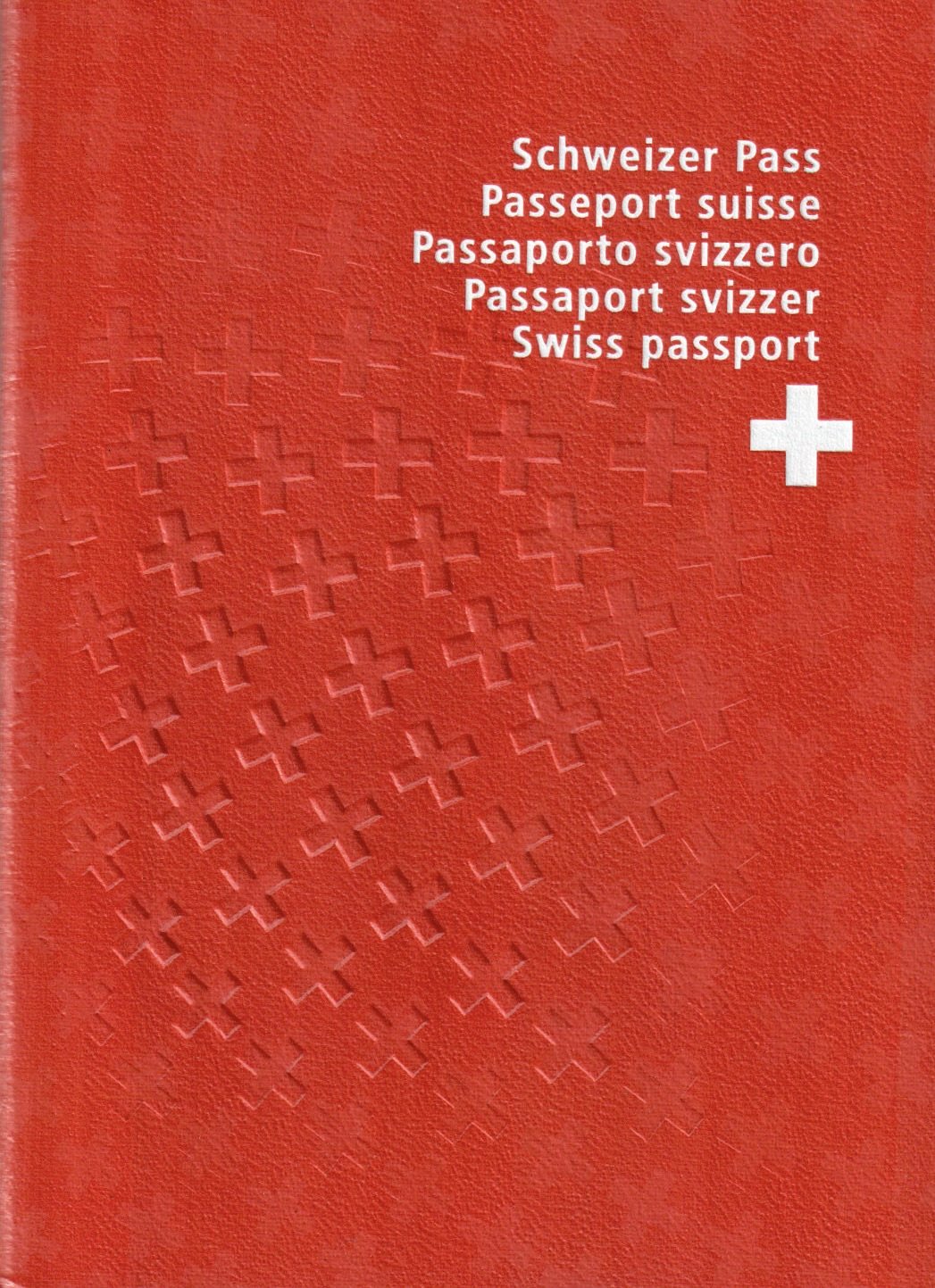
A country can share a passport and still read in different worlds.
What the country holds
The assumptions people bring to Swiss literature tend to cluster around a handful of names — and sometimes not even Swiss ones. Wilhelm Tell, Switzerland's most recognizable literary figure, was created by Friedrich Schiller, a German who never visited the country. That a foreign playwright's work became the defining Swiss national myth says something about how Swiss literature has always struggled to project itself outward on its own terms.
The reality is considerably richer … and considerably less visible. German-speaking Switzerland produces the largest volume of literary work and benefits from proximity to the German and Austrian publishing markets. Max Frisch and Friedrich Dürrenmatt established German-language Swiss literature as a serious international force in the postwar decades. Frisch's Stiller and Dürrenmatt's Der Besuch der Alten Dame entered the European canon and have remained there. Charles Lewinsky's Melnitzis one of the more remarkable examples of that tradition finding an international readership: first published in 2006, this multigenerational saga of a Swiss-Jewish family won the Prix du meilleur livre étranger in Paris and the Best Foreign Novel prize in Beijing before appearing in English translation with Atlantic Books in 2015, the translator Shaun Whiteside shortlisted for the Oxford-Weidenfeld Prize. Lewinsky's subsequent novels, including Gerron and Der Halbbart,have continued to appear on Swiss and German prize lists, and he remains one of the most versatile and internationally visible Swiss German authors working today. More recently, Dorothee Elmiger's triple win — German, Bavarian, and Swiss book prizes for Die Holländerinnen — represents the kind of recognition that opens international rights conversations. The Schweizer Buchpreis, awarded annually since 2008, has done much to raise the profile of German-language Swiss writing; Karl Rühmann's Der Held, represented by VRAP, was shortlisted in 2020.
There is also a layer of Swiss German literature that exists outside of the written standard — Schwyzerdütsch, the spoken dialect, which varies significantly by canton and has no unified written form, yet has produced serious literary work. Pedro Lenz writes in Bernese dialect, and his novel Der Goalie bin ig has been translated into ten languages (including English, as Naw Much of a Talker) a rare exception in a tradition that is almost impossible to carry outward, since translating dialect into another dialect raises questions that have no clean answers.
French-speaking Switzerland has a different relationship with its own tradition. Charles Ferdinand Ramuz is considered one of the foundational figures of French-language Swiss literature, but he is not universally known even within Switzerland. While researching this piece I came across a comment from a Swiss German person who had grown up without reading a single Swiss book in school. Their literature classes had covered German literature but Swiss authors had not featured. They had never heard of Ramuz. The reply they received — "What?? Ramuz was on a Swiss postage stamp. He was on a Swiss banknote. He wrote a libretto for Stravinsky. I don't think your teachers could offer the name of a German speaker that was true of. Were you not taught any of the Italian- or Romansch-speaking Swiss writers either?" — said everything about the gap between what Switzerland has produced and what it has managed to pass on, even to its own readers. Someone else in the same thread noted, almost in passing, that the Swiss literary figure they thought of most readily was Wilhelm Tell, a character created by a German playwright who never visited the country.
In terms of international reach, French-speaking Switzerland has produced writers who travelled through Parisian publishing circuits: Jacques Chessex won the Prix Goncourt in 1973 for L'Ogre, the only Swiss author ever to do so. Jean Ziegler built one of the most widely read political bodies of work of his generation across Europe, while remaining largely peripheral in English (a gap I have written about in another article on this site). More recently, Sarah Jollien-Fardel from Valais won four prizes for her novel Sa préférée in 2022 and 2023, including the Prix du Roman Fnac, the Choix Goncourt de la Suisse, and the Prix Goncourt des détenus. That level of recognition suggests the appetite for Swiss French fiction is real, when it finds its readers.
Italian-speaking Ticino has produced writers of genuine international stature, though through routes that bypassed Swiss publishing infrastructure almost entirely. Fleur Jaeggy, who lives in Milan and was married to Adelphi publisher Roberto Calasso, has been translated into over twenty languages. The Times Literary Supplement named her novel Proleterka a Best Book of the Year, and Sweet Days of Discipline won the Premio Bagutta and she received the Grand Prix suisse de Littérature in 2025. Published in English by And Other Stories, she is among the most internationally recognized Swiss authors alive, but her career was built through Italian and anglophone publishing networks rather than Swiss ones.
And then there is Romansh, spoken by fewer than 60,000 people in the Graubünden valleys, which exists in five regional dialects and has been producing serious literary work since the Reformation. The tradition has its own dedicated publishers: Chasa Editura Rumantscha, the only fiction publisher working exclusively in the Romansh language, and Edition Mevina Puorger, a Zurich-based house run by Romanist Mevina Puorger, specialising in new editions of out-of-print Romansh classics alongside contemporary voices. Oscar Peer, one of the most important Romansh writers of the twentieth century, was published at both houses. Gianna Olinda Cadonau has been translated into Spanish with support from the Swiss Embassy in Madrid. Ruth Gantert, literary critic and editor, has spent two decades building bridges between Switzerland's linguistic traditions — translating from French and Romansh into German, and running the trilingual literary yearbook Viceversa. In 2025 she received a Werkbeitrag from the Canton of Zurich for her German translation of Flurina Badel's novel Tschiera — one of the few instances in Swiss literary life where a writer from within the Romansh tradition carries another's work outward. Badel is arguably the best-known Romansh writer internationally, working across poetry, visual art, and performance. Her work has reached readers in French, Spanish, and English — the last a rare achievement, given that the pool of translators capable of working from Romansh into English is close to non-existent. There is no established network, no dedicated funding stream, no critical community in English-language publishing that follows Romansh literature as a matter of course. For a work to travel outward from this language, it depends almost entirely on individual acts of will.
What the prizes reveal
The prize landscape reflects these imbalances, though not uniformly. The Schweizer Buchpreis, the country's most prominent literary award, is technically open to authors from all linguistic regions, but only for works written in German. A Romand or Ticinese author can win it, but only by writing in a language that is not their own. The award that carries the country's name is, in practice, a prize for German-language Swiss writing.
The Grand Prix suisse de Littérature, awarded annually by the Federal Office of Culture, takes a different approach: open to all four national languages and dialects, it distributes prizes of CHF 25,000 across multiple works each year and includes a special translation prize every two years. The 2026 Grand Prix went to Corinne Desarzens, a Franco-Swiss writer from Vaud. These two prizes together illustrate the tension at the heart of Swiss literary life: one instrument built to celebrate the country's multilingualism, and one that, despite its name, serves primarily one language of it.
Pro Helvetia offers translation grants for foreign publishers acquiring Swiss titles — a meaningful intervention that removes one of the most practical obstacles to translation, though the programme is not widely known outside the industry and reaches a relatively small number of titles each year. These things exist and matter, but they do not yet add up to a system.
What would need to change
The answer involves a chain of small interventions. Translators need to actively advocate for Swiss titles across all four traditions, not wait to be commissioned. Publishers in London and New York need to look past a label that conjures mountains and watches. Rights professionals need to move across all four literary worlds rather than specializing in one. Swiss schools could do more too — a young person growing up in the Romandie should encounter Frisch, a young person in Zurich should encounter Ramuz, and both should encounter Flurina Badel. Underneath all of this sits a more basic question of attitude: whether Swiss literary multiplicity is seen as an asset worth articulating clearly, or a logistical inconvenience to be managed quietly.
Switzerland will not develop the international publishing infrastructure of France or Germany. It probably shouldn't try. What it has instead — four languages, four literary worlds, a particular kind of edge that comes from being always slightly between cultures rather than fully inside any one of them — is unusual enough to be worth representing on its own terms.
That, in the end, is what this work is for.